
One record, from the first enquiry to the last invoice.
A reservation, the vehicle assigned to it, the contract, the deposit, the damage, the invoice and the channel commission are not six records in six systems. They are one record seen from six angles — which is why nothing has to be reconciled at the end of the month.
- A single source of truth for bookings, customers, vehicles and finance
- Configurable workflows instead of scattered spreadsheets
- Role-based views for operations, fleet, revenue, finance and management
- Integrations and APIs as part of the operating model, not an add-on
From reservation to return without the handoffs.
Know what every vehicle is doing — and what it is earning.
Pricing & revenue
Price with the market. Decide with your fleet.
One inventory. More places to sell it.
Fiscal compliance inside the rental, not at month end.
How it fits together
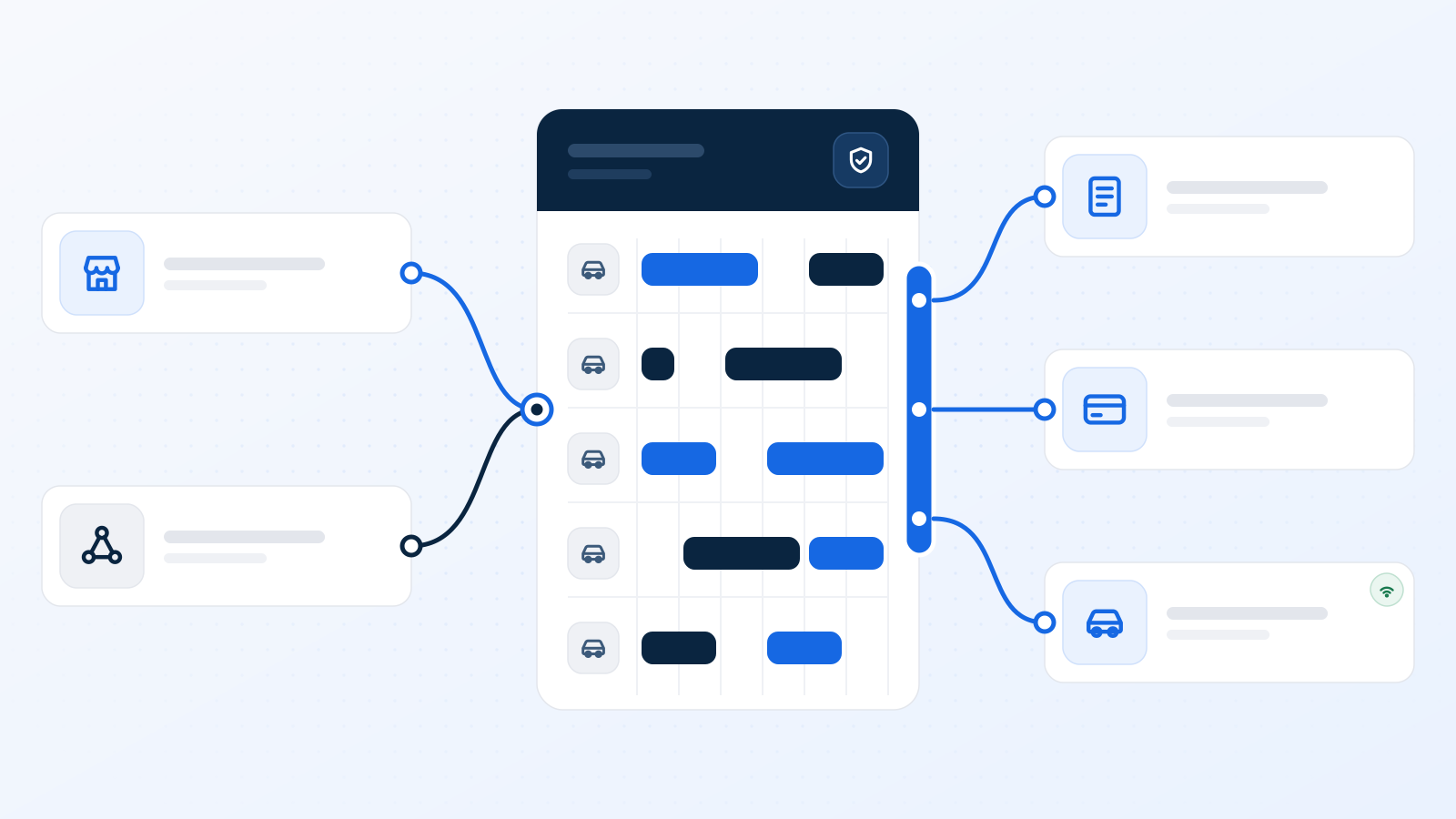
- Operations —
- the planner, today’s movements, exceptions that need a decision
- Revenue —
- rates, availability, market position, performance by class and station
- Fleet —
- status, service due, downtime, cost and contribution per vehicle
- Finance —
- invoicing, fiscal transmission, commissions, recoverable charges
- IT —
- access, audit, integrations and the API
Do we have to use every module?
No. Most operations start with reservations, fleet and invoicing, and add distribution and pricing once the daily workflow is settled. The platform is one system, but adoption is staged.
Can it run alongside our existing accounting package?
Yes — that is the intended model. Renticom produces the documents from the rental and passes them to your accounting system rather than replacing it.
How long does it take to go live?
It depends on how much history you migrate and how many integrations are in scope. The migration method has eight defined stages and starts with an assessment that gives you a timeline before you commit.